Dr. Gymbro
←

#athletic performance

1 article
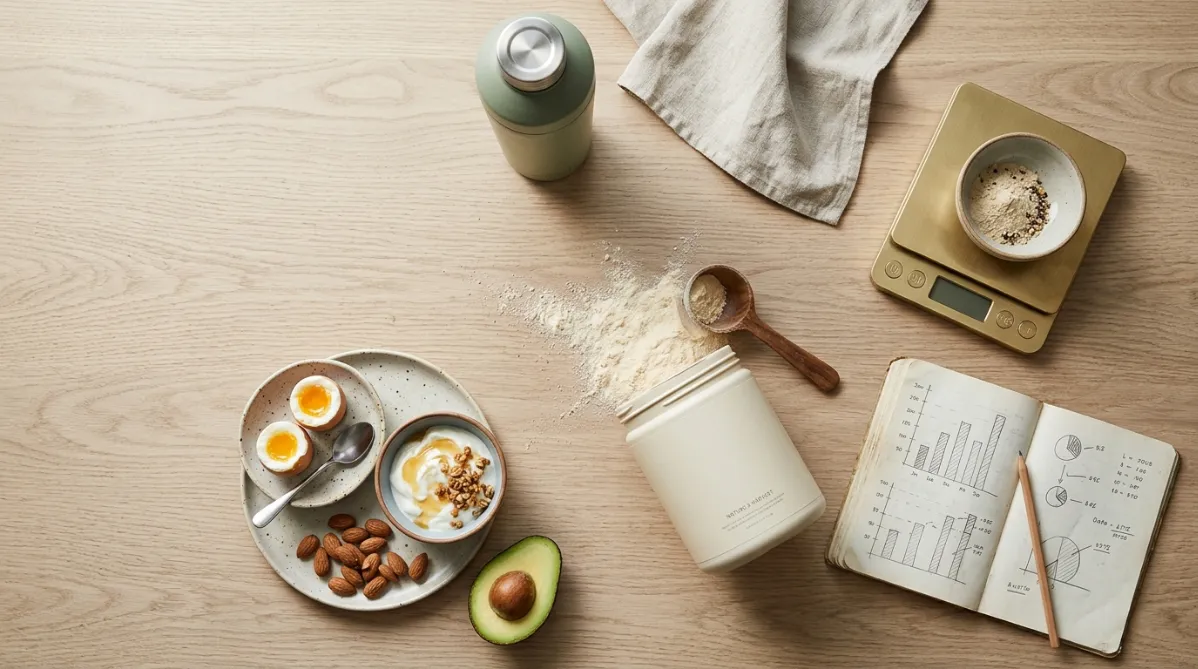
A wide, editorial-style flat lay shot from directly above on a pale oak table in soft morning window light. At the center, an open matte cream-colored protein powder tub sits tipped slightly, with a wooden scoop resting beside it and a small, elegant dusting of fine powder spilling across the wood grain. To the left, a neat balanced arrangement of whole foods: two soft-boiled eggs in a ceramic dish, a small bowl of Greek yogurt with a drizzle of honey, a handful of almonds, and a halved avocado. To the right, a minimalist brass kitchen scale holding a small ceramic bowl, with a handwritten notebook page beside it showing simple pencil-drawn bar charts and a few scribbled numbers, no legible text. A matte shaker bottle in muted sage green stands near the top edge, along with a folded linen napkin in warm oatmeal tone. The color palette is restrained and modern: warm creams, soft sage, terracotta accents, and natural wood, with gentle diffused shadows and subtle film-like grain. Composition leaves generous negative space on the left third of the frame for headline overlay. The mood is calm, thoughtful, and quietly skeptical, like a contemporary health and science magazine cover. Shallow depth of field, crisp textures on powder and ceramic, high-end lifestyle photography, clean and uncluttered.
nutrition

Il lato oscuro della proteina in polvere: i benefici svaniscono quando le calorie sono pareggiate

BY DR. GYMBRO ·

La proteina in polvere ti rende davvero più forte e favorisce il recupero, o è solo un modo elegante per aggiungere calorie? Una meta‑analisi bayesiana su 75 studi randomizzati e 1.206 atleti ha mostrato benefici concreti ma limitati. La svolta è che tutti gli effetti significativi compaiono quando l’apporto energetico non è equiparato tra i gruppi. Il consiglio più pratico riguarda il dosaggio: circa 1 g/kg/giorno in più da integrazione, per raggiungere circa 2 g/kg/giorno in totale.

This page is available in